Receive up to $50 of personalized Pexagon Technology products for $25!

Showing posts with label spices. Show all posts

Thursday, March 1, 2012

Combining Lots of Herbs and Spices in a Dish Part 3

Watch Video : 10 Tips When Eating Paleo Click here
Man vs Wild : Fishing for Salmon in Alaska - Food for Survival

The skill of combining herbs and spices are indeed an essential part in the art of cooking. Usually only one or two strongly flavoured herbs and spices is applied in a dish,  but what if you make a dish with  4 or 5 and more herbs and spices into cooking. Well this is an interesting exception for us to try.


~ Combinations of Herbs & Spices ~


~"BOUQUET GARNIS"~
Bouquets  garnis are little bundles of aromatic herbs and spices.  Simply tie parsley, thyme, and bay in a bunched bouquet garni, to add flavour to stocks, soups, sauces and stews. The idea is to contain the herbs so that only their flavour (no flecks or fragments) will permeate the food. The bouquet garni can be made in various ways:  fresh springs of several herbs tied up in a string; fresh or dried herbs tied in a cheesecloth bag, or stuffed in a stainless‐steel tea ball; or fresh or dried herbs clamped by a string between two stalks of celery. Always make the string long enough so that the loose end can be tied to the pot handle — this facilitates easy retrieval and removal.

The classic contents of bouquets garnis are parsley, thyme, and bay. Peppercorns, whole allspice, whole cloves, celery leaf, tarragon, or marjoram are occasionally added. You may want to come up with your own bouquet ideas. For instance, a combination of lemon peel, whole peppercorns, and garlic can impart interesting flavours to simmering vegetables. Or, a bundle of cinnamon stick, orange and/or lemon peel, and nutmeg can be used to flavour warm apple cider. You can make bouquet garnis in advance in cheesecloth bags and freeze them. Add the bundle to simmering food directly from the freezer.


~"FINES HERBES"~
 Fines herbes consists of chervil, chives, parsley, and tarragon. The combination is often stirred into salads, sauces, and vegetables.  Fines herbes maybe freshly minced and added to omelets, sautés and other recipes at the very last minute of cooking. Fines herbes are especially alluring because of the freshness of the herbs and the harmonious combination that creates a satisfying flavour.


~"QUATRE EPICES"~
Quatre epices simply means “four spices” and is used in French haute cuisine to flavour roast meats, poultry, hardy vegetables, or desserts. The four spices are a groun combination of any of the following: cloves, mace, nutmeg, ginger, cinnamon, black pepper, or white pepper. Quatre epices without peppers are used to spice pumpkin pies.


~"CURRY POWDER"~
Did you know that there is no curry plant used to produce curry powder. Actually, curry powder is a combination of many aromatic spices including coriander seed, cumin seed, nutmeg, mace, cardamom seed, white mustard seed, black mustard seed, turmeric, fenugreek seed, chilli, ginger, peppercorns (white or black), garlic, allspice, cinnamon, cayenne, and fennel seed. These are all ground into powder.

Curry powder is a necessity in East Indian cuisine and has been imported to Southeast Asian recipes. Thai curries (except for Thai Muslim curry) do not include sweet spices like cinnamon, ginger, nutmeg, and mace and include lots of fresh basil. Thai curry powders are commonly combined with a liquid and used as pastes. To enliven its exceptional aroma, curry powder should always be heated before eating.


~"CHILLI POWDER"~
Chilli powder is a combination of ground spices and herbs that always contain dried chilli plus a selection of garlic powder, oregano, allspice, cloves, cumin seed, coriander seed, cayenne, black pepper, turmeric, mustard seed, and paprika. As with all dried spice and herb combinations, chilli powder is best when ground as needed and heated before eating. If you must make chilli powder ahead, store it in a tightly covered glass jar kept in a cool, dark place.


~"CHINESE FIVE SPICE POWDER"~
Chinese five spice powder is a dried, ground combination of Szechuan peppercorns, cinnamon, cloves, fennel, and star anise. The combination is used for seasoning and as a condiment. Five‐spice powder provides its best flavours when ground as needed and heated before serving. If you’re using five‐spice powder as a condiment, toast it first in a dry sauté pan. If you must store fivespice powder, keep it untoasted in a tightly covered glass jar in a cool, dark place.


~"PICKLING SPICE"~
Pickling spice typically contains dill weed and/or dill seed along with any of the following: dried chilli, mustard seed, bay, allspice, white or black peppercorns, cinnamon, cloves, coriander seed, turmeric, cardamom, ginger, celery seed, garlic, mace, and nutmeg. The basic idea is to choose spices according to the item you want to pickle. Cucumber pickles, for instance, may be enhanced by dill, mustard seed, celery seed, garlic, and black peppercorns. While you could combine cinnamon, nutmeg, bay, and peppercorns to pickle carrots.


~"GARAM MASALA"~
Garam Masala is a northern Indian spice usually added to meat dishes as a final seasoning. Garam Masala combines cardamon pods, bay leaves, black peppercorns, cumin seeds, coriander seeds, cinnamon stick and cloves together and ground to a fine powder. Garam Masala is best stored in a small airtight container until needed.

For interesting and sumptouos  Paleo Recipes visit www.wix.com/paleomeals/allpaleo

Combining Lots of Herbs and Spices in a Dish Part 2

Paleo Cookbooks - Recipes for the Paleo Diet


~ The SPICES ~


Allspice - this spice is also known as pimiento and Jamaica pepper. Its name came from the combination of cinnamon, pepper, juniper, and clove in the flavor of this dried, unripe berry of a Caribbean evergreen tree. Sweet foods are perfectly more savoury when whole or ground berries of allspice are added. Whole allspice can also be applied when cooking stock or stew while ground allspice is best in mulled cider, fruit desserts, and pumpkin pies. Nutrients : calcium, iron, manganese, magnesium, phosphorus, potassium, zinc, folate, dietary fiber, vitamins A, B1, B2, B6, C and E.


Anise - also known as Star anise and Chinese anise, this spice belongs to the parsley family and has a highly aromatic, sweet flavour that has same taste with licorice. Whole or ground anise are used in most Asian cuisines, soups, and in dessert recipes such as spice cakes, cookies, fruits etc... Nutrients include calcium, iron, magnesium, phosphorus, potassium, manganese, zinc, vitamin A, B2, B3, B6, C, E, pantothenic acid, and dietary fiber.


Caraway - seeds of this spice are actually the dried fruits of the caraway plant. It reveals a sharp, slightly bitter, flavour with sweetish undertones on meat dishes, soups, salads, stews, sauerkraut and cakes. The flavour goes specially well with apples, pork, duck and goose. Its root can also be eaten as a vegetable, while its oil works nicely in flavouring meats. With key nutrients - calcium, iron, magnesium, phosphorus, potassium, zinc, manganese, vitamins A, B1, B2, B3, B6, C and E, folate and dietary fiber.


Cassia or Chinese cinnamon - refers to the aromatic bark of Cinnamomum cassia. This spice has a stronger and less delicate flavor than cinnamon. However, ground cassia bark is not easy to distinguish from cinnamon so cheap cassia is commonly substituted for the more expensive real cinnamon. The dried bark cassia can be used to impart flavour to dishes such as punches removing the stick before serving is advised.Ground cassia is best suited in combination with allspice, nutmeg, and cloves for spicing mincemeat, curries, pilaus, meat dishes, desserts and cakes. Key nutrients are calcium, manganese, iron, vitamin K, with a very good source of dietary fiber.


Cinnamon - this spice comes from the evergreen bush or tree of cinnamon which can reach heights of 9 meters or 30 feet but this tree is regularly pruned to maintain a shrub height that facilitated harvesting. The bark of the lower branches are peeled and dried under the sun and both the dried bark and ground cinnamon are used extensively as a spice. Cinnamon's flavour is better applied for sweet dishes, cakes and cookies than the cassia. Its oil is distilled from the shoots and the bark. To create a distinctive combination of subtle and pleasant flavours, Arab Cooks put stick cinnamon in curries and mutton stews. Nutrients include calcium, manganese, iron, vitamin K, and dietary fiber.


Cardamom - this spice has a grape-fruit like and floral flavour; a member of the ginger family. Scandinavian and Indian cuisines used cardamom extensively and often included in holiday breads, fruits, and sweet vegetables such as winter squash, pumpkin, and sweet potatoes. It can also be used when making homemade curry powder. Nutrients - calcium, iron, manganese, phosphorus, potassium, zinc, magnesium, vitamin C, B1, B2, B3, and dietary fiber.


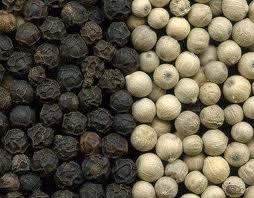
Pepper - this spice is very commonly and universally used and applied to virtually all dishes, depending on the taste preferences of the consumer. It comes from vines belonging to a different family compared to the red or capsicum peppers. Popular to cooks are the  black peppers which is the dried , unripe berry of a tropical perennial vine and it has a much stronger spiciness and odour than white peppers. White peppers on the other hand, is the seed of the pepper plant alone, with the darker coloured skin of the pepper fruit removed - reason why it has lesser aroma.  Both peppers may be bought as whole peppercorns, or cracked and coarsely ground. Nutrients include such as calcium, iron, copper, manganese, magnesium, potassium, vitamins C, K, and dietary fiber. Tip : Pepper loses flavour and aroma through evaporation, so it should be stored in an airtight container to help preserve its original spiciness longer.


Ginger - this spice is one of the best known of all spices and has been cultivated in almost all parts of the tropics. Fresh ginger has more delicate flavour compared to dried ginger which has a more spicy and intense flavouring. Gingers can be applied to beverages, biscuits, cakes, fish, sauces, and spice mixtures. It is popularly used in European and North American cooking for sweet recipes, but  in the Orient this is applied extensively for chutney, fish, meat, and pickles. Key nutrients : iron, magnesium, potassium, selenium, manganese, vitamins B6, E and dietary fiber. Ginger roots are packed with vitamin C and traces of copper.


Saffron - this spice consists of dried stigmas gathered by hand from the flower of the saffron bulb. This low- growing  perennial plant is a native to Southwest Asia and was first cultivated in Greece. One pound of saffron requires about 225,000 stigmas that's why it is an expensive item in the market. This is used to impart flavour and a yellow colour specially to European dishes such as the well known Spanish chicken-rice dish "Arroz Con Pollo". Nutrients are iron, potassium, magnesium, manganese, vitamins B6 and C.

Mustard - this spice is grown for its leaves which are used in salads and consumed as greens. A member of the cabbage family, mustard seeds when dried are odourless and flavourless. Whole mustard seeds are used as flavouring during pickling and added to have pungency to many foods, including pickles, meats, and salads. Powdered dry mustard produces a sharp, hot flavour when it is moistened. Make sure to use the resulting paste immediately. This is used for roast beef, mustard pickles, sauces, and gravies. Prepared mustard is a mixture of powdered mustard with salt, spices, and lemon juice, with wine or vinegar to preserve the mustard’s pungency. Mustard leaves are harvested while tender and eaten as greens. Mustard greens are an excellent source of vitamins A, B, and C, and powdered ones have calcium, iron, magnesium, phosphorus, manganese, significant amounts of selenium, and dietary fiber.
Tip : When mustard seed is mixed with water, a chemical reaction produces an essential oil that accounts for the hot taste of mustard. This essential oil is easily destroyed during cooking, so it is best to add mustard at the last minute.


Nutmeg - is the seed of a yellow plum-like fruit from an evergreen tree. A membrane covering the kernel provides mace, a kind of spice. Ground nutmeg is highly preferred for sweet foods and goes very well with meat, spinach, sweet potatoes, and vegetables. It has significant manganese content, and dietary fiber but high in saturated fat.


Paprika - this spice comes from sweet red pepper. The pepper pods are dried and ground after removing the core and seeds to lessen the pungency. This has been extensively used in Spanish cooking and known to be Hungary's national spice. Hungarian goulash - a soup of meat, noodles and vegetables, is nothing without paprika. This used to add flavour to chicken, fish, meats, tomato catsup, and tomato juice. Packed with nutrients such as magnesium, phosphorus, copper, manganese, iron, potassium, 
vitamins  A, B1, B2, B3, B6, C and E.


Wednesday, February 29, 2012

Combining Lots of Herbs and Spices in a Dish Part 1

Paleo Cookbooks - Recipes for the Paleo Diet


Cooking with herbs and spices can provide a flavor of adventure to any meal. Many herbs seem to give off their best flavours when mixed into foods that originate from other cultures. To give you a recap, below are the more popular list of what herbs and spices are suited to your diet:

~ The HERBS ~

Basil - this herb has a sweet, minty, mild peppery flavor and is very suitable for chicken and fish recipes. Very popular in Italian cooking as this is a perfect addition to many light salads and a basic ingredient in pesto. Packed with key nutrients such as vitamins A, B1, B3, C, calcium, iron, magnesium, phosphorus, potassium, zinc, manganese, panthothenic acid, and folate. 


Bay leaves, laurel or sweet bay - these are the dried leaves of the evergreen laurel tree. This herb has a woody, mildly astringent flavour with a slight taste of mint and provides wonderful flavours to meats, fish, poultry, stews, and vegetables. Packed with key nutrients such as calcium, iron, magnesium, phosphorus, potassium, zinc, manganese, vitamins A, B2, B3, B6, C, and E, folate and fibre. Tip: Bay leaves should be removed before serving.


Chervil or Coriander - this herb has an aromatic lacy leaves that brings sweetness and anise-like flavor to a food. Similar to parsley, chevril can be used to garnish and flavor almost any dish and combines well with other herbs. Packed with key nutrients such as calcium, iron, magnesium, phosphorus, potassium, zinc, manganese, vitamins A, B1, B2, B3, B6, C, and E, folate and fibre. Tip : Chevril should be added at the last minute as while cooking if added right at the start, limits to savor the flavor.


Dill - this herb has a slightly bitter taste and unusual but quite fascinating fragrance. This can be used to flavor salads, fish and lamb. This is also an essential ingredients for Greek salads and serves as a natural preservative when making pickles. Key nutrients include calcium, phosphorus, sodium, potassium, iron, vitamins A, B1, B2 and B3.


Chives - this herb has a slender, bright green, rushlike leaves and reveals a mild onion-like flavor. You can consider this as a mild substitute for onions when thinking of herbs.  Perfect to garnish for salads, soups, broths, stews, omelets, scrambled eggs, and cooked vegetables. With key nutrients such as calcium, iron, magnesium, phosphorus, potassium, zinc, manganese, a significant amount of vitamin C, A, B, B2, B3, B6 and E, folate and fiber. 
Tip : To have a final and decorative touch, put chives blossoms to your salads.


Marjoram - this comes from the perennial herb of the mint family. It has a pleasing fragrant aroma and has flavor similar to thyme and for that they are typically used in combination or to replace the other. Marjorams are good to be added to almost every dish usually with egg dishes, lamb, poultry, sausages, soups, stews, and vegetables.  Key nutrients include calcium, copper, iron, phosphorus, potassium, magnesium, vitamins A, B6, C and K, folate and dietary fiber.  
Tip : Marjoram's flavor is lost very quickly while cooking so add marjoram at the last minute or immediately before serving.


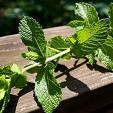
Mint - specifically refers to the aromatic perennial plant of the genus Mentha - peppermint and spearmint. This herbs can be used in soups, fish and meat sauces. In England, lamb without meat sauce would be unthinkable so this is a must-have on their table. Spearmint is also the preferred mint for lamb and for serving an iced tea. Peppermint key nutrients includes phosphorus, zinc, calcium, iron, magnesium, potassium, copper, manganese, vitamins A, B2, B3, C, folate and dietary fiber.   


Rosemary - this herb comes from the evergreen shrub of the mint family. It gives as strong, aromatic, and slightly bitter taste to dishes. This can be good for soups, on broiled steaks, or with other meat dishes, sauces and vegetables. Key nutrients include calcium, iron, potassium, manganese, magnesium, c opper vitamins A, B6, C , folate and dietary fiber.  


Parsley - this herb belongs to the Umbelliferae family which include among others carrot, celery, fennel and dill. Fresh and dried leaves are often added to fish and fish sauces, meats, sauces, soups, and vegetables. Lacy springs of parsley are regularly served on restaurant meal and this should not be taken aside as this is fully loaded with nutrients such as protein, vitamins B1, B2, B3 and B6, pantothenic acid, phosphorus and zinc; a very good source of vitamins A, C, K, calcium, iron, magnesium, potassium, copper, manganese, folate and dietary fiber.


Oregano - likewise a member of the mint family and also the name given to more than 40 species of perennial plants which dried leaves reveal a particular flavor to food. Oregano herb produced in cooler climates is not as potent as those originating from warmer climates such as in southern Italy. So this is why it is being used extensively in Italian cooking and can be added to cheese dishes, chili beans, fish, gravies, meats, sauces, sausage, salads and soups. Key nutrients are calcium, iron, magnesium, potassium, copper, manganese, vitamins A, B6,C, E (alpha tocopherol), and K, folate and dietary fiber.


Sage - comes from the mint family as well. Sage leaves are often dried and available in whole, rubbed, or ground form and can also be found in some mixed spice combinations. Commonly used for baked fish, meats and meat stuffing, sausages and sauces. Nutrients include calcium, iron, magnesium, copper, manganese, vitamins A, B3, B6, C, E, and K, folate and dietary fiber.


Saturday, January 28, 2012

Paleo Complete Shopping List Ingredients

Visit : All Paleo Meals and Recipes E-Store www.wix.com/paleomeals/allpaleo

Scan this using your mobile

Paleo quality recipes tend to be simple and also have limited ingredients. Paleo Dishes tend to be: grain-free, bean-free, potato-free, dairy-free, as well as sugar-free. Recipes which Paleo enthusiasts get pleasure from are greatly accessible and for that you should consider to discover. You as well will get pleasure from producing a bit of the most well-liked paleo diet plan quality recipes.I 'd been in my most appealing form and gorgeously body shape in my entire life ever since following a paleo diet plan and also the quality recipes inside the Paleo Cookbooks  assisted me personally in preparing scrumptious foods which are so so pleasant.

Wholesome, scrumptious, as well as easy, the actual Paleo Diet plan may be the diet plan all of us had been prepared to take. These  include  from light summer salads to delicious winter season sauces, just about all without needing the harmful ingredients that usually guide the most popular meals. The actual Paleo Cookbooks obviously shows  that eating healthy does not in any way have to be dull or even tasteless. It is possible to produce quality recipes which enable you to avoid harmful desserts as well as fried meals. The Paleo diet plan, paleolithic diet plan or even caveman diet plan, is about organic meals to assist accomplish superb healthfulness along with a great body. Within the Paleo Diet plan, you will identify how you can enhance your wellbeing as well as slim down through simulating the Paleolithic diet plan through healthy meals relevant at the nearby supermarket. 

Several people encounter many benefits inside the very first 7 days to 10 days following  this amazing diet plan. Each and every presumption that the vegetarian buddies make use of to prevent meat in relation to wellness  is actually discredited right here. To be able to really slim down utilizing any kind of diet plan you'll need meals you love to eat which are healthy. If you would like to taste a flavourful and healthy as well in one blast or  just about all in a single chance, the actual Paleo Quality recipes is the perfect way to go.

Discover what sort of diet plan based on lean meat, sea food, fruits, as well as more vegetables can result in perfect bodyweight, ideal wellness, as well as ideal sports effectiveness. To assist you in your shopping list of Paleo ingredients, here is the complete list where you can identify which is the do’s and dont’s in Paleo recipes.


The following list of ingredients are not classified as being 100% paleo friendly. However,
depending on how strict you choose to be on the paleo diet, determines whether you
include them into your diet.

Meats Bacon, Ham
Fruits and Vegetables : Beetroot, Chestnuts, Green Beans, Peas, Pickles, Raisins, Sweet Potato/Yam
Nuts and Oils : Cashews, Grass fed Butter
Others Arrowroot, Coffee Beans, Egg Albumen Powder, Gelatin, Maple Syrup


SO what are you waiting for.... go to the market and shop for your very first  Paleo Dish.  


Cheers To your Health!


AzureGreen- Celebrating All Paths to the Divine


Related Posts Plugin for WordPress, Blogger...